
The day is here—market expansion has finally arrived in the West! On May 1, 2026, PacifiCorp becomes the first non-California utility to join the CAISO Extended Day-Ahead Market (EDAM). This is a ground-breaking milestone that marks the first operations of what will become one of two major day-ahead energy markets in the West (along with SPP’s Markets+, set to begin operations in 2027). Coinciding with the start of EDAM is another CAISO initiative, the Day-Ahead Market Enhancements (DAME). Both EDAM and DAME are years in the making, and the early operations will provide valuable insights into where Western power markets are headed in the coming years.
What You Need to Know
Extended Day-Ahead Market
EDAM is a day-ahead energy market designed to build upon the benefits of the existing CAISO Western Energy Imbalance Market (WEIM). EDAM is a voluntary market in which Balancing Area Authorities (BAAs) across the Western Interconnection may choose to participate. By doing so, the BAAs give EDAM control over scheduling and dispatching their generation assets in both the day-ahead and real-time energy markets.
Importantly, EDAM is not a full Regional Transmission Organization (RTO). Each BAA retains responsibility for transmission and reliability planning, resource procurement, and ancillary services. The primary goal of the market is to improve regional coordination by optimizing the use of generation and transmission across a broader footprint—lowering system costs and reducing renewable curtailments. Seven BAAs have already executed agreements to join EDAM, while several others have publicly expressed interest or intent to participate.
| EDAM Utility Participants | Market Products |
| Executed EDAM Implementation Agreements: PacifiCorp (begins operations May 2026) Portland General Electric (“PGE”) (October 2026) Balancing Authority of Northern California (“BANC”) (2027) Los Angeles Department of Water and Power (“LADWP”) (2027) Turlock Irrigation District ( “TID”) (2027) Public Service Company of New Mexico (“PNM”) (2027) Imperial Irrigation District (“IID”) (2028) Publicly Stated Interest or Intent to Join: NV Energy, Idaho Power, BHE Montana, Arizona G&T Co-ops, WAPA Sierra Nevada | Energy: Yes, day-ahead and real-time. Capacity: No, but California LSEs must still procure RA. BAAs retainresponsibility for procurement. Ancillaries: No, BAAs must provide their own. |
Day-Ahead Market Enhancements
Despite the similar acronym, DAME is completely different from EDAM. DAME is a set of two new market products designed to update CAISO’s market design to better manage uncertainty and variability associated with a grid increasingly dependent on renewables. It will launch alongside EDAM on May 1, 2026. While EDAM is about expanding who participates in the day-ahead market, DAME is about improving how the market itself works — making it more operationally flexible and reliable for all participants.
- Imbalance Reserve (Up/Down) — Ensures that the day-ahead market schedules sufficient flexible reserves to meet net load imbalances and ramping needs that arise between the day-ahead and real-time markets. The quantity of imbalance reserves procured by the market will be based on the historical uncertainty in the day-ahead forecasts for load, solar, and wind. Only resources that can be dispatched in the fifteen-minute market are eligible to provide imbalance reserves.
- Reliability Capacity (Up/Down) — Designed to bridge the gap between cleared net load in the day-ahead market and the actual net load forecast. Rather than leaving that difference to be resolved in real-time, this product schedules resources more efficiently the day before to cover expected forecast error — reducing stress on the real-time market.
How EDAM and DAME Tie Together
One of the primary goals of EDAM is to leverage diverse resources across a wider geographical area to meet load and operational needs across the West more efficiently. DAME’s imbalance reserves will be allocated across the EDAM footprint and play a key role in increasing the market’s benefits for the following reasons:
- A broader resource mix will lead to more efficient selection of imbalance reserve capacity. With PacifiCorp resources now bidding into the market, and even more resources from other BAAs in the coming years, the reserves supply stack will likely be procured at lower cost than any individual BAA could do on its own. Because imbalance reserve transfers will be firm within EDAM, BAAs can access any imbalance reserves to meet their net load uncertainty regardless of their physical location within the market.
- Imbalance reserves will be integrated into the forward market, allowing for co-optimization of products. Energy, ancillary services, and now imbalance reserves will be co-optimized to improve unit commitment decisions across each BAA. This also allows the marginal price to consider the opportunity cost of not providing other products, which both improves the decision-making process for the grid operators while also ensuring that scheduling coordinators can transparently bid for each product. For example, if a resource is held back from the energy market to provide imbalance reserves, marginal pricing ensures it is compensated enough to cover what it would have earned selling energy instead — making the resource financially indifferent between the two outcomes.
- By pooling across EDAM, each EDAM BAA’s individual net load uncertainty requirements and capacity procurement are reduced. Because of the geographic, weather, and time zone differences, each individual BAA’s uncertainty is not expected to materialize coincidentally across the larger EDAM footprint. This reduces the total imbalance reserves needed for reliability.
- Reliability Capacity will help cover forecast errors anywhere in the market. The optimization process considers transmission constraints to ensure deliverability, but it improves upon the existing residual unit commitment (RUC) process by providing both upward and downward dispatch capability. If a BAA over- or under-forecasts its load, there is a mechanism to provide upward or downward dispatch to support the grid.
Imbalance reserves may more than double the operational savings that EDAM will already provide. CAISO commissioned a study to understand the incremental savings that the imbalance reserve product would have on operational costs. While this study considered EDAM across the entire West, the key takeaway is that nearly 60% of the cost savings benefits of EDAM come from imbalance reserves.1
| Scenario | California | Other Western States | TOTAL |
| West-Wide EDAM+DAME | $214 M/year | $329 M/year | $543 M/year |
| EDAM without Imbalance Reserves | $86 M/year | $120 M/year | $206 M/year |
The Challenges Ahead
The May 1 launch of EDAM and DAME is just the beginning. A multi-year onboarding wave will deepen the market’s Western footprint, with the next entry being Portland General Electric this October 2026. But it is not just EDAM that is expanding. Markets+, which is SPP’s response to a Western day-ahead energy market, will begin operations in 2027. SPP also began operations of its West RTO earlier in 2026. Suddenly, after decades of independent operations, the West is becoming a complex cross-section of competing markets.
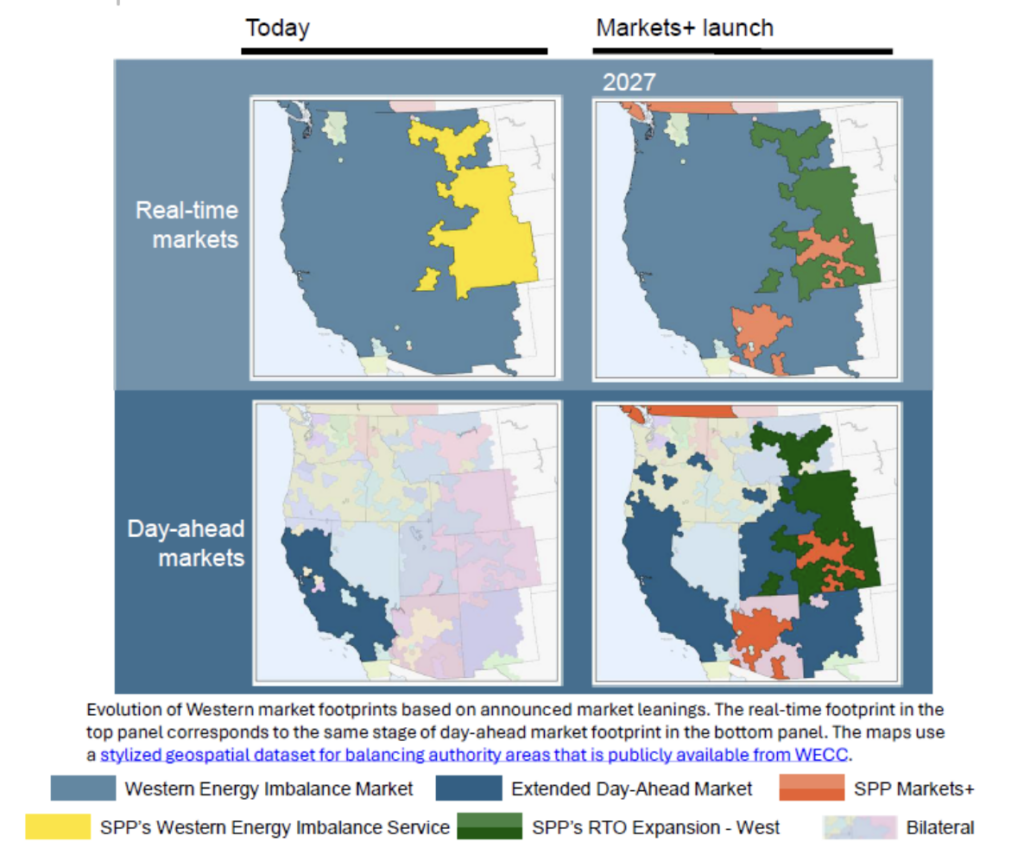
Figure 1. Projected evolution of Western markets. Source: CAISO
Grid operators will face significant challenges managing the market-to-market seams. These challenges arise when markets with different designs and protocols try to optimize differentsystems independently while sharing a connected transmission network, despite having incomplete information on how the other market is operating. EDAM, Markets+, and SPP RTO West will each need to adapt to overcome barriers to trade, inefficient congestion management, and suboptimal dispatch.
And it’s not just day-ahead and real-time operations that face challenges. A critical point in reliable grid management is still undetermined – resource adequacy (RA). Load Serving Entities (LSEs) in California will still be required to follow CAISO’s RA rules, but non-California BAAs have no such obligation. Initially, there was a thought that these BAAs would join the Western Resource Adequacy Program (WRAP), a voluntary west-wide RA program that would pool capacity resources across the region. However, in recent months, many of the EDAM entities have provided their exit notices to WRAP. These BAAs, including PacifiCorp, PGE, BANC, TID, NV Energy, and PNM, have formed a coalition to develop their own regional RA proposal. With CAISO serving as a consultant, this group is aiming to design a voluntary program to leverage the EDAM footprint and market-based efficiencies, while ensuring that each participant maintains sufficient capacity to reliably meet its load obligations under a wide range of system conditions. Until this is developed, these BAAs will be on their own to manage their capacity and reliability.
A Milestone, Not a Destination
The go-live of EDAM and DAME on May 1, 2026, is a landmark moment for Western energy markets, but it is also just the opening act. The early results of PacifiCorp’s integration will signal how well the market’s design holds up in practice, and the answers will matter enormously as more utilities come online in the years ahead. Meanwhile, the West’s rapidly evolving market landscape — with EDAM, Markets+, and SPP RTO West all operating in close proximity — will test whether regional coordination can outpace regional fragmentation. The unresolved question of resource adequacy adds another layer of complexity that participants and regulators alike will need to address head-on. What is clear is that the decisions made in these early months will shape the trajectory of Western power markets for decades to come. The West has waited a long time for this moment — now the real work begins.